WHAT SCUBA DIVING BOAT CLEANERS DO (AND WHY THEY’RE EFFECTIVE)
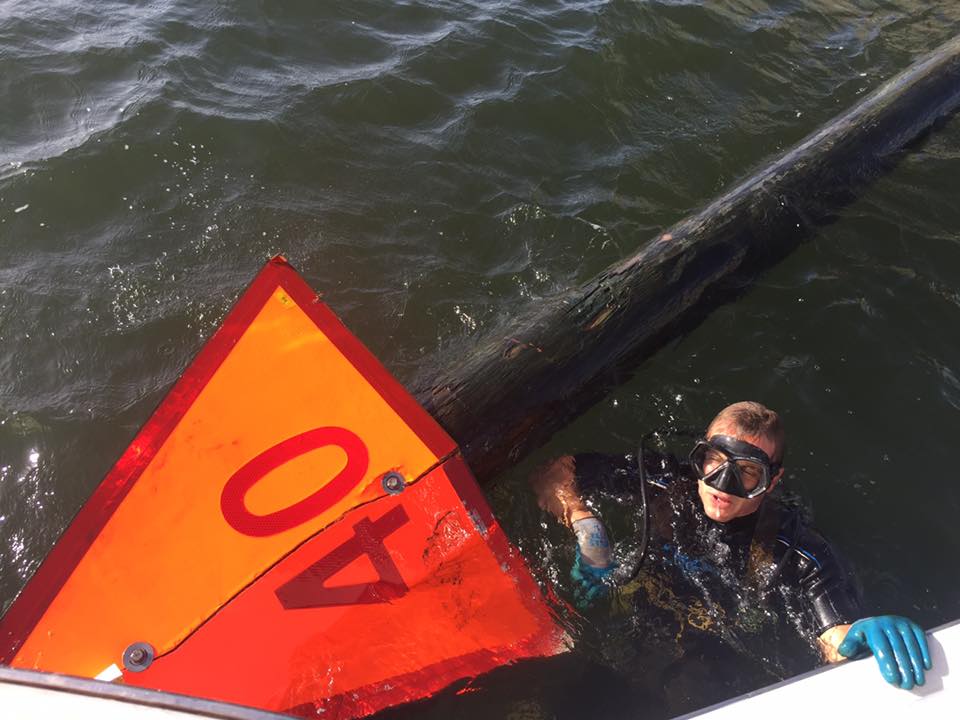
There's a reason boat owners don't clean their own hulls. The work happens underwater, in low visibility, with tools designed to remove marine growth without destroying the paint underneath.
It takes trained divers who know what they're looking at and what they're doing down there. That's what Barnacle Busters provides. Our certified dive teams service boats at marinas and private docks across Palm Beach, Broward, and Martin Counties. But "scuba diving boat cleaner" only describes half the job. The other half is inspection, and that part is just as valuable.
How the Process Works
A scuba diving boat cleaning starts before anyone gets in the water. The diver assesses the boat type, checks the bottom paint condition, and selects the right tools for the job. Aggressive scraping that works on one coating can damage another, so the approach has to match the hull.
Once in the water, the diver works section by section along the hull, removing algae, slime, and barnacles from the surface. They pay special attention to areas where growth concentrates: around the waterline, near through-hull fittings, along the keel, and around the running gear. The propeller, shaft, and rudder all get cleaned individually.
While they're down there, the diver is also conducting a visual inspection. They check the zinc anodes for wear, look for fishing line or debris wrapped around the shaft, note any dings on the prop, and examine through-hulls for signs of corrosion or weeping. When they surface, you get a report on what they found.
Why Expertise Matters
Not everyone who goes underwater with a scrub brush is the best person to service your boat. Professional hull cleaning requires divers who understand marine coatings, corrosion, and vessel systems well enough to do the work without causing damage.
For hull cleaning specifically, that foundation gets paired with hands-on experience working on different vessel types, hull materials, and paint systems. The difference between a certified diver and someone without formal training shows up in the details.
A trained diver knows how much pressure to apply to an ablative paint versus a hard bottom coat. They know how to identify early-stage electrolysis damage on a shaft. They know when a zinc is at 50% and still functional versus when it's past the point of protecting anything.
Why Not Just Haul It Out?
Hauling a boat out for cleaning is expensive, time-consuming, and usually unnecessary for routine maintenance. A travel lift or crane costs money. The yard also charges a daily storage fee. The boat sits on blocks while work gets scheduled and completed. For a routine hull cleaning that takes a diver an hour or two, that level of disruption doesn't make sense.
Scuba diving boat cleaners bring the service to you. Your boat stays in its slip, there's no transport risk, and the turnaround is measured in hours rather than days. For boat owners who want their vessel ready to go on short notice, this is a significant advantage.
Haul-outs still have their place. Bottom paint jobs, major repairs, and certain coatings like PropSpeed require the boat to be out of the water. But for the regular cleaning and inspection cycle that keeps your boat running well between those bigger jobs, underwater service is faster, cheaper, and less hassle.
What You Get That You Can't Get Any Other Way
The real value of a scuba diving boat cleaner isn't just the clean hull. It's the regular set of trained eyes below your waterline.
A diver who services your boat monthly develops a working knowledge of its condition over time. They notice when growth patterns change, which can signal a failing section of antifouling paint. They notice when an anode is depleting faster than expected, which might point to a stray current issue. They spot the kind of small problems that are cheap to fix now and expensive to fix later.
You can't get that from a once-a-year haul-out. You can't get it from leaning over the side with a mask and snorkel. You get it from a professional who is down there regularly, with the training to understand what they're seeing.
South Florida Boats Need This More Than Most
Water temperature drives biofouling speed, and South Florida's waters stay warm enough to support active growth all year. There's no winter slowdown. Boats kept in the water here accumulate barnacles and algae faster than boats in cooler climates, and the salt concentration along the coast makes it worse.
Most boats in this region need a dive cleaning every three to four weeks to stay ahead of growth. Skipping a month or two can mean the difference between a routine cleaning and an intensive scrape that risks damaging your paint. A monthly schedule keeps each visit straightforward and keeps your boat performing the way it should.
Book a Dive Cleaning with Barnacle Busters Today
If your boat has been sitting without a cleaning, or if you've been doing it yourself and aren't confident in the results, it might be time to bring in a dive team. Contact Barnacle Busters to schedule a one-time cleaning or set up a monthly maintenance plan. We've been doing this across South Florida for over 40 years, and our divers know these waters as well as anyone.