ZINC ANODES FOR BOATS: WHAT THEY DO AND WHEN TO REPLACE THEM
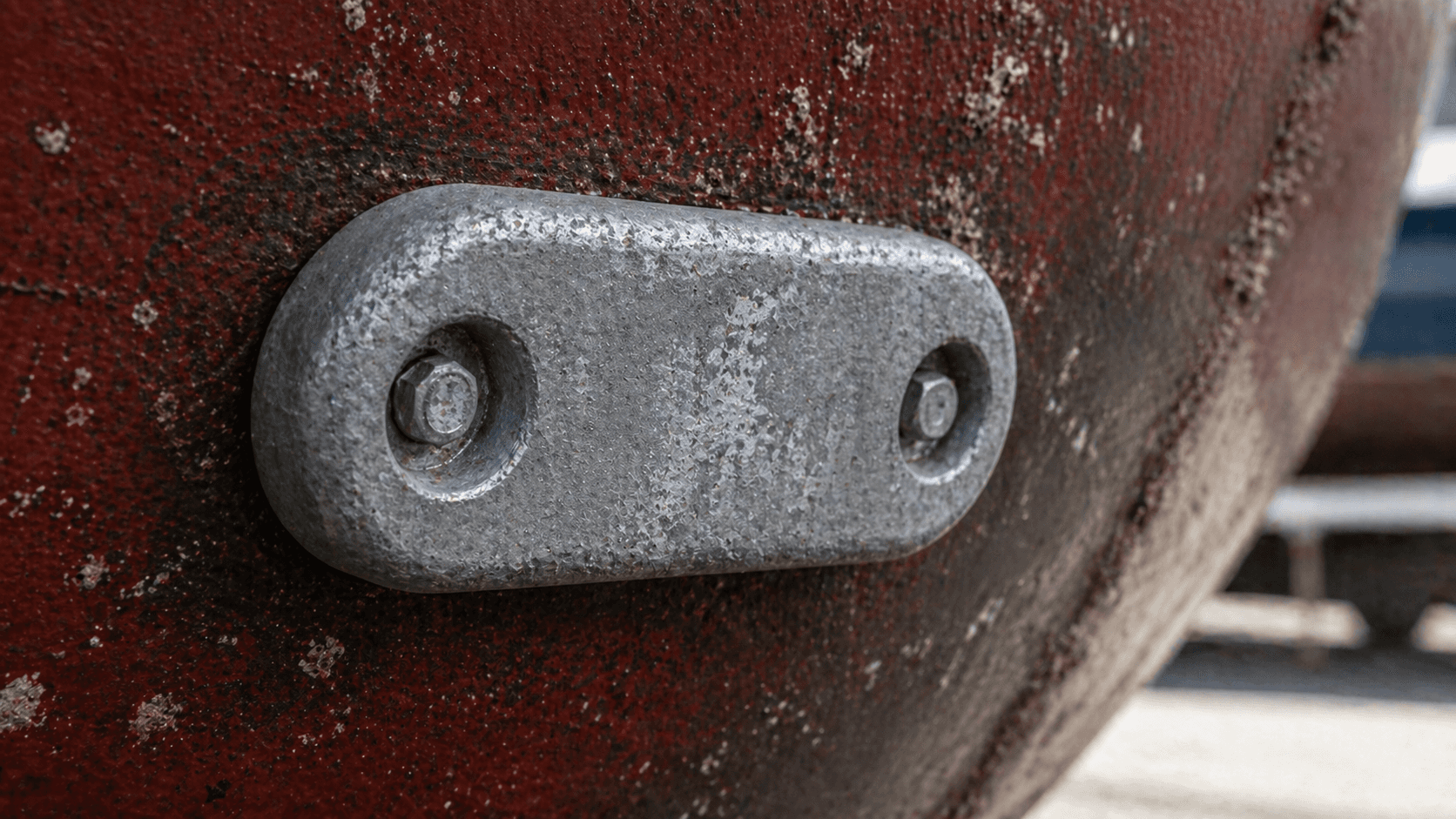
If you've ever had a diver tell you your zincs are low, you probably nodded and said go ahead and replace them. Most boat owners know zincs are important. Fewer understand exactly what they do or why they wear out.
This post explains the basics in plain terms so you know what's happening below your waterline and why it matters. Barnacle Busters checks zinc anodes on every dive visit. We stock genuine CAMP zincs on every service truck and replace them on site. But before we get into the service side, it helps to understand the problem zincs are solving.
What Galvanic Corrosion Is
Your boat has several different metals below the waterline. The propeller might be bronze or aluminium. The shaft is usually stainless steel. The rudder, struts, and through-hull fittings are made from other alloys. When two dissimilar metals are connected and immersed in saltwater, an electrical current flows between them. One metal gives up its ions to the water and slowly dissolves. The other stays intact.
This process is called galvanic corrosion, and it's not something you can prevent entirely. It's a natural electrochemical reaction that happens whenever the conditions are right. Saltwater is an excellent electrolyte, which is why boats in the ocean corrode faster than boats in freshwater.
The American Boat and Yacht Council publishes Standard E-2 for cathodic protection, which provides guidelines for protecting boats from galvanic corrosion through proper anode installation and bonding. The principle is straightforward: if corrosion is going to happen, make it happen to a metal you can afford to lose.
How Zinc Anodes Protect Your Boat
A zinc anode is a block of zinc mounted near the metals it's designed to protect. Because zinc is more electrically active than bronze, stainless steel, or aluminium alloys, it becomes the metal that corrodes first.
The electrical current flows through the zinc instead of through your prop, shaft, or rudder. The zinc gradually dissolves, and the metals it's connected to stay intact. Think of it as a shield that wears itself down so your running gear doesn't have to. That's why they're called sacrificial anodes. They sacrifice themselves to protect everything else.
Most boats have several zincs mounted at different points below the waterline: on the shaft, near the rudder, on the trim tabs, and sometimes on the hull itself. Each one protects the metals in its immediate area. The system works as long as the zincs have enough mass remaining to continue drawing the corrosion away from the components they're connected to.
When to Replace Them
The standard rule is to replace a zinc anode once it's lost about half of its original mass. At that point, it's starting to lose its ability to provide adequate protection. Wait too long past that threshold and the corrosion shifts to the next most active metal in the system, which is usually something you don't want to lose.
For boats kept in South Florida saltwater, that halfway point can arrive faster than you'd expect. Warm, high-salinity water accelerates the electrochemical reaction that wears zincs down. A zinc that lasts a full year in cooler or brackish water might reach its replacement point in six to eight months here.
Boats connected to shore power face an additional factor: stray current from the dock's grounding system can accelerate zinc consumption even further.
If your zincs are depleting faster than once a year, it doesn't necessarily mean you need bigger anodes. It could indicate a stray current problem or a bonding issue that needs to be diagnosed separately. A diver who checks your zincs regularly can spot that pattern and flag it before the damage reaches your running gear.
What Happens When You Ignore Them
Once a zinc is fully depleted, the galvanic corrosion it was absorbing moves to the next available metal. That's your propeller, your shaft, your rudder fittings, or your struts. The damage shows up as pitting on the surface, roughness on the shaft, or weakened material that becomes prone to cracking under load.
The repair costs for corroded running gear are significantly higher than the cost of replacing zincs on schedule. A new set of zincs is a routine expense. A new propeller or shaft is not. And corrosion damage that goes far enough can compromise the structural integrity of through-hull fittings, which creates a safety issue, not just a maintenance one.
Zinc vs Aluminium vs Magnesium Anodes
Zinc is the most common anode material for saltwater boats, but it's not the only option. Aluminium anodes are becoming more popular because they work in saltwater, brackish water, and freshwater.
Zinc doesn't perform well in freshwater because it tends to form an oxide layer that insulates the surface and reduces its effectiveness. Magnesium anodes are the most active of the three and are primarily used in freshwater applications. They corrode too quickly in saltwater to be practical for most marine use.
For boats that stay in South Florida's coastal waters, zinc remains the standard choice. It provides reliable protection in high-salinity conditions and is widely available in all common sizes and mounting styles. Barnacle Busters stocks genuine CAMP zincs and replaces them during routine hull cleaning visits, so the check and swap happens without a separate service call.
Why Monthly Checks Matter
Zinc depletion isn't something you can see from the dock. The anodes sit below the waterline, and by the time you notice corrosion on your prop or shaft, the damage is already done. That's why checking your zincs during every hull cleaning visit is so valuable.
A diver who sees your boat monthly can track how fast each anode is wearing and replace them before they drop below the safe threshold. They can also compare depletion rates across different areas of the boat.
If the shaft zinc is wearing twice as fast as the rudder zinc, that's useful information. It might mean there's a bonding issue, a stray current source, or a section of the system that's working harder than it should be. That kind of pattern recognition only happens with regular observation. A once-a-year haul-out gives you a single snapshot. Monthly dive visits give you a trend line.
Keep Your Metals Protected with Barnacle busters
Zinc anodes are one of the cheapest forms of insurance your boat has. They cost a fraction of the metals they protect, and replacing them on schedule prevents the kind of corrosion damage that leads to expensive repairs and lost time on the water.
If you're not sure when your zincs were last checked, or if you've noticed any pitting or discolouration on your prop or shaft, it's worth getting a diver in the water to take a look. Contact Barnacle Busters to schedule a zinc inspection or set up a monthly maintenance plan. We service boats across Palm Beach, Broward, and Martin Counties and carry replacement anodes on every truck.