10 THINGS EVERY BOAT OWNER SHOULD KNOW ABOUT BARNACLES
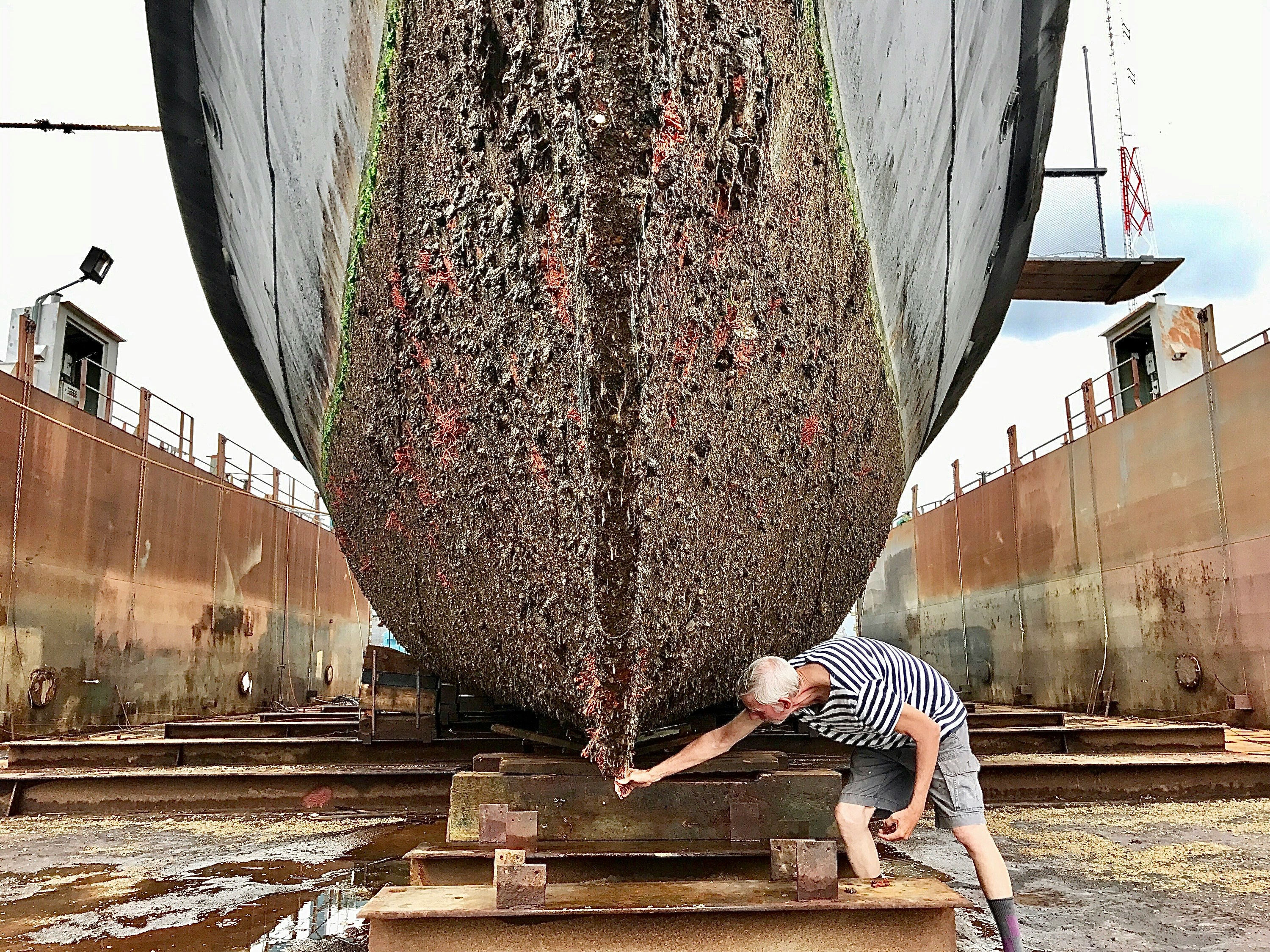
If you own a boat in South Florida, you're already familiar with barnacles. They're the hard, white bumps your diver scrapes off every month, and the reason your fuel shoots up when you skip a cleaning. But most boat owners don't know much about the animal itself, and some of the details are genuinely surprising.
Barnacle Busters has been removing these pests from hulls for over 40 years, so we've developed a certain respect for what we're up against. Here are the ten things worth knowing about the barnacles under your boat.
1. They're crustaceans, not shellfish
Barnacles look like tiny shells stuck to a rock, which is why people assumed for centuries that they were molluscs. They're actually arthropods, part of the same biological group as crabs, lobsters, and shrimp. They’re not that delicious, though - except goosenecks.
According to NOAA's National Ocean Service, there are more than 1,400 species found in waterways around the world. Charles Darwin spent eight years studying and classifying them before he ever published On the Origin of Species.
2. They live their entire adult lives upside down
A barnacle attaches itself to a surface headfirst using its forehead, then spends the rest of its life kicking food into its mouth with its legs. Those feathery limbs, called cirri, extend out through the top of the shell to sweep plankton and tiny organisms from the water.
3. Their glue is stronger than anything humans have made
Barnacles secrete a fast-curing cement from specialised glands near their antennae. This adhesive bonds to almost any hard surface underwater, and it's strong enough that researchers have been studying it for decades trying to replicate its properties for commercial and medical use.
Once that cement sets, the barnacle isn't going anywhere. Even after the animal dies, the shell stays firmly attached. This is what we scrape off at regular hull cleanings. The longer barnacles sit, the harder they are to remove without damaging your bottom paint.
4. A single adult can release over 10,000 larvae
Barnacles are prolific breeders. One adult can release thousands of larvae into the water column, where they drift as plankton before settling on a hard surface and cementing themselves in place.
In South Florida's warm, nutrient-rich waters, this cycle happens quickly and year-round. That's why a hull that looked clean two weeks ago can already have a fresh crop of juvenile barnacles forming.
5. Most barnacles are hermaphrodites
The majority of barnacle species carry both male and female reproductive organs. Self-fertilisation is rare, though. Instead, they reproduce by extending a long tube to fertilise a neighbouring barnacle. This reproductive tube can reach up to several body lengths, making barnacles one of the most well-equipped animals in the ocean relative to their size.
6. Their shells are made of calcium, not chitin
Although they’re crustaceans, they lack exoskeletons made of chitin, a tough organic material. Barnacles are different since they build hard plates out of calcium carbonate, the same material found in limestone and seashells.
Six interlocking plates form a cone around the body, with four more forming a trapdoor at the top. These plates don't moult. They grow by adding calcium to the edges, which is why older barnacles are larger and harder to remove.
7. They're extremely sensitive to touch
Despite having no eyes worth mentioning and no ears at all, barnacles are highly responsive to vibration and physical contact. Touch is their dominant sense. When they detect movement or pressure near their shell, they withdraw their cirri and close their plates almost instantly.
This is a defence mechanism against predators, but it also makes them quick to seal up when a diver starts cleaning nearby.
8. They don't have a heart
Barnacles lack a true heart. Instead, they have a blood sinus, a simple cavity that contracts to push blood through the body. It serves the same basic purpose as a heart but without the chambers or valves you'd find in most animals. The blood itself is clear and doesn't carry oxygen the way human blood does. Oxygen is absorbed directly through the body wall and the cirri.
9. Some species are considered a delicacy
In Spain and Portugal, percebes (goose barnacles) are harvested from rocky coastlines and sold at high prices in seafood markets. Collectors risk serious injury climbing wave-battered rocks to pry them loose, which is part of why they're so expensive.
They taste nothing like the acorn barnacles on your hull, but the resemblance is there.
10. They cost you real money every day they sit on your hull
This is the one that matters most to boat owners. Barnacle buildup creates drag that forces your engine to burn more fuel at the same speed. Research on biofouling has shown that heavy hull fouling can increase drag by up to 60%.
For recreational boats not just in South Florida, even a few weeks of buildup starts showing up as lost speed and higher fuel consumption.
A monthly cleaning keeps that drag in check and protects your bottom paint from the kind of damage that leads to an early repaint. It also gives your diver a chance to inspect your zinc anodes, propeller, and running gear while they're down there.
Keep Them Off Your Hull with Barnacle Busters
Barnacles are fascinating animals, but they don't belong on your boat. The longer they stay, the more they cost you in fuel, paint damage, and potential repairs to your running gear. A consistent cleaning schedule is the simplest way to stay ahead of them.
If you're overdue for a hull cleaning or want to set up a monthly plan, contact Barnacle Busters to schedule a dive. We service marinas across Palm Beach, Broward, and Martin Counties.